
Minimum Wage Increase - Trade Offs and CNBC Rankings
Daft Punk and the Clash !

Recently I spent three nights at the Downtown Marriott in Anchorage, Alaska.
Oh! Was it cold in Anchorage in January? - you ask.
NO! It was colder!
Was there any snow?
NO! It was ONLY SNOW and only as far as you could see - which includes Mt. Denali/McKinley.
Anyway, I had booked my room on the Bonvoy app. Easy peasy. Highly recommend.
During my booking, I was asked to click here if wanted my room cleaned while there.
No, thanks. I’m good.
Did I get a discount? Also no.
Didn’t think twice about it. Sort of like when hotels ask you to hang up your towels vs. harming the Earth by having a fresh one each day. SAVE THE PLANET! (and our water bill) We see you…
Oh well…life continued apace.
Come to think of it, I also didn’t see any room cleaners during my stay.
hmm…
<end scene>
Economist Thomas Sowell’s famous line “there are no solutions, only trade offs” came to mind while watching the House Labor and Commerce Committee debate the upcoming increase to Virginia’s minimum wage.
HB1 would incrementally move Virginia to a $15 per hour minimum wage by January 1, 2028.
Why $15? No idea…oh, wait... It was Bernie’s campaign - Fight for 15! Alliteration sells. Hey, he’s not America’s most famous and lovable millionaire Socialist for nothing!
Proponents of the bill focused on how this would increase take home pay of low skill, low wage workers.
What they neglected to mention was that the minimum wage is a wage floor that moves up most hourly wages, not just those who actually earn the current minimum wage of $12.77 an hour.
Virginia’s minimum wage floor has been moving up incrementally due to previous legislation. Begs the questions:
Why incremental?
Why not just raise all wages?
Why stop at $15?
Trade offs
There are trade offs to raising wages especially through government mandates.
Here are some of those trade offs or arguments against raising the wage floor:
Job losses and reduced hours: Opponents argue that when labor costs increase, employers—especially small businesses—may respond by cutting jobs, reducing hours, or hiring fewer workers. They point to economic theory suggesting that when the price of labor rises above its market value, demand for labor falls. Binding constraint and equilibrium wage.
Harm to small businesses: Critics contend that small businesses operating on thin profit margins can’t absorb higher labor costs as easily as large corporations. This could force some to close, reduce services, or raise prices significantly. Also - could force some to sell to larger competitors who will then raise prices due to less competition. #Monopolies
Reduced opportunities for low-skilled workers: Some argue that minimum wage jobs serve as entry points to the workforce, particularly for young people and those with limited skills. Higher wages might make employers more selective, shutting out those who need experience most.
Automation acceleration: Opponents suggest that higher labor costs incentivize businesses to invest in automation and self-service technology faster than they otherwise would, ultimately eliminating jobs entirely.
Regional differences: Critics argue that a one-size-fits-all minimum wage doesn’t account for cost-of-living variations. What’s reasonable in Arlington may be excessive in Abingdon or Altavista, potentially causing economic disruption in lower-cost areas.
Inflation concerns: Some economists worry that broad wage increases could contribute to price inflation, potentially eroding the purchasing power gains for minimum wage workers.
Raising the minimum wage also acts as a Wage Escalator:
Wage Escalator
As an escalator, minimum wage increases tend to push up wages throughout the pay structure, not just for minimum wage workers.
How it works: When the minimum wage rises, it creates ripple effects:
Workers earning slightly above minimum wage often receive raises to maintain pay differentials
Employers adjust their entire wage structure to preserve internal hierarchies
Workers use the new minimum as leverage to negotiate higher pay
Compressed wage structures get reestablished at higher levels
Example: If the minimum wage goes from $10 to $15, a worker currently making $16/hour might successfully argue for a raise to $21/hour to maintain their premium over entry-level workers.
This escalator effect is why minimum wage increases can affect a much broader portion of the workforce than just those earning the minimum, and why the total impact on labor costs can exceed the direct effect on minimum wage workers alone.
Analysis
Raising the minimum wage across the entire Commonwealth will have mixed results and obvious trade offs.
It’s not great economics, but the trade off politically far outweighs the mostly hidden downsides.
It just depends on what businesses are going to be impacted and in what districts.
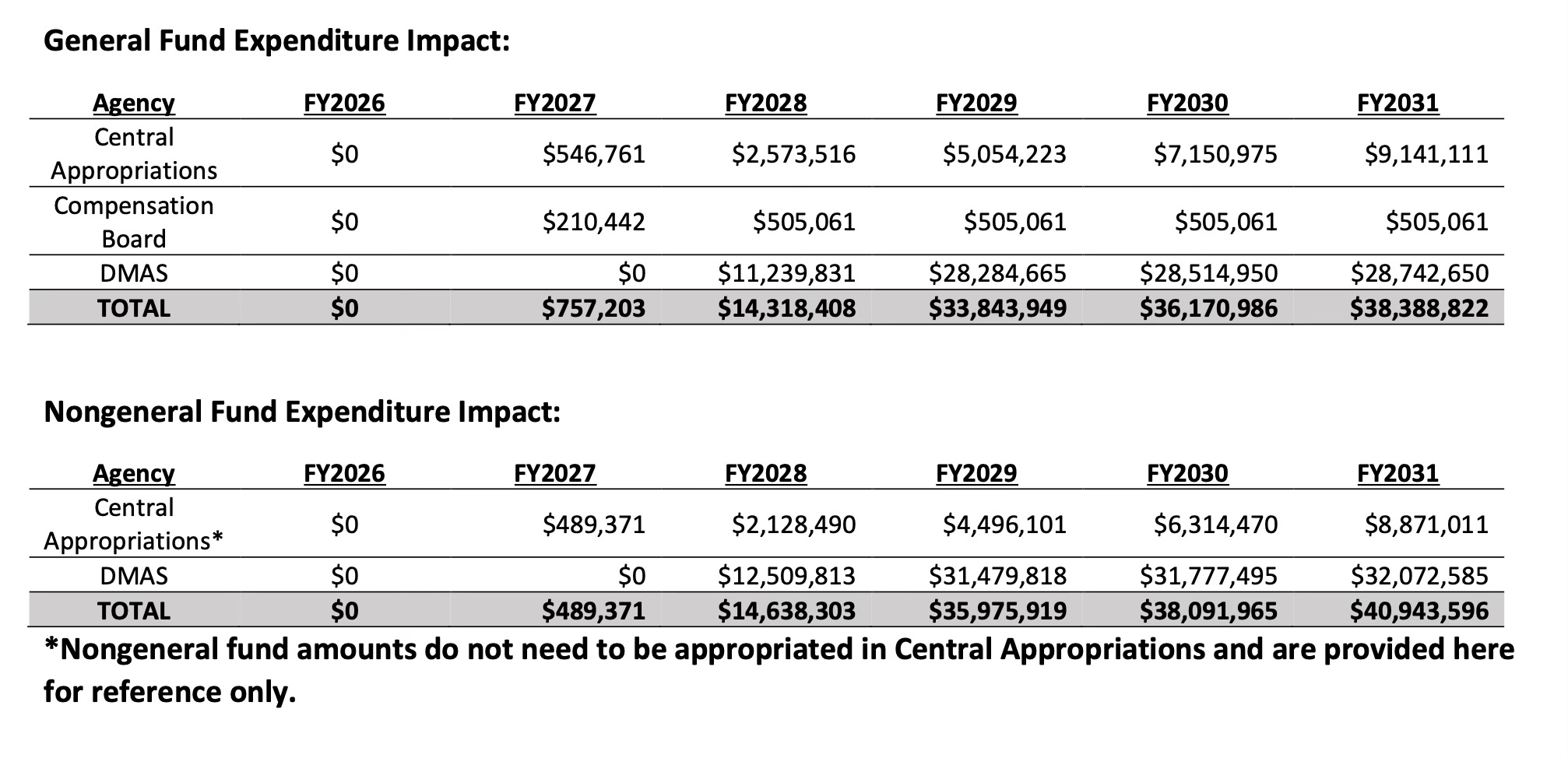
Below is a screen shot from the Fiscal Impact Statement that accompanies HB1 as it now is in the House Appropriations Committee.
The General Assembly will have to trade off the cost of raising the minimum wage for state employees, just like every business with hourly employees will have to do.
CNBC Ranking Impact
These are the states with minimum wages at $15 an hour or higher and their respective CNBC 2025 Top State for Business Ranking in BOLD
Washington $16.66 - #14
California $16.50 - #22
Connecticut $16.35 - #28
New York $15.50 - #23
New Jersey $15.49 - #30
Delaware $15.00 - #29
Illinois $15.00 - #13
Maryland $15.00 - #32
Massachusetts $15.00 - #20
Rhode Island - $15.00 - #46
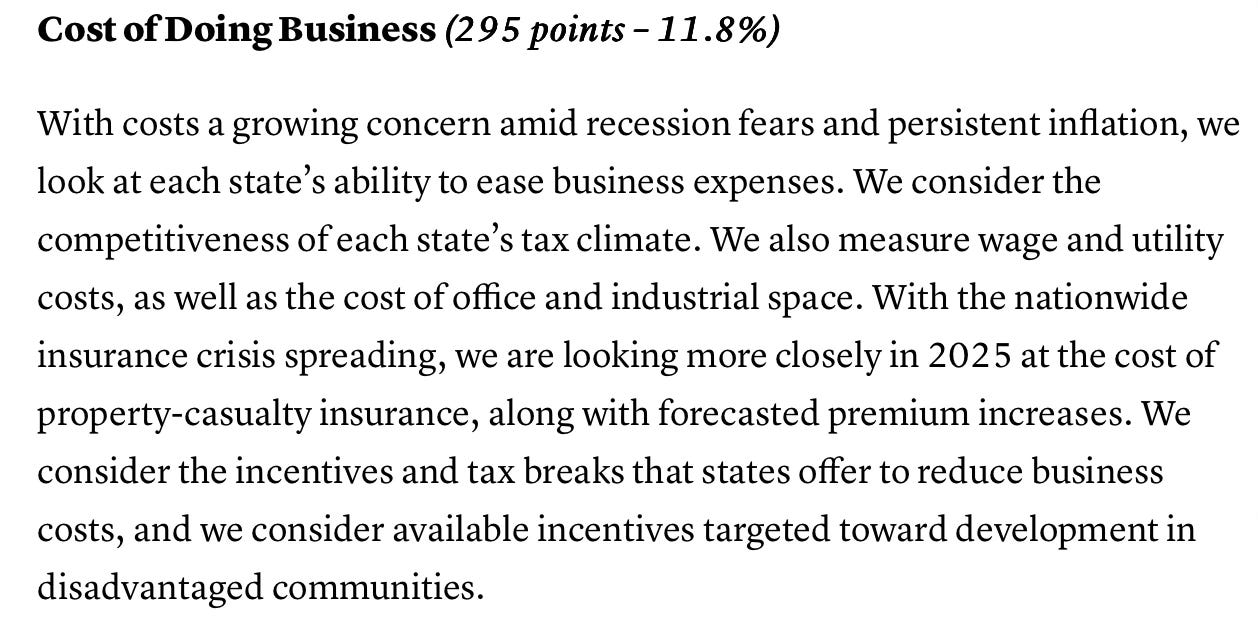
How CNBC views Cost of Doing Business:
Sowell is right - it’s all about trade offs.
Or as former Pittsburgh Steelers coach and Hampton native Mike Tomlin says;
It’s not about what you’re capable of, it’s about what you’re willing to do.
Democrats:
Republicans:
Why worry? It’s just money.
And math.
Really strong breakdown of the wage escalator effect. Most people miss how minimum wage changes push up entire pay structures, not just the bottom rung. The CNBC rankings data is intresting but honestly kinda muddies the point since there's so many other factors in those rankings besidse labor costs.
I think I'd go for as low as $2/hr part time job, 3 days of work I could buy a new pillow and ear plugs and socks that fit. I've been applying to jobs in NYC forever and can't get anything, I'm obviously not worth the $15.50 minimum wage.